

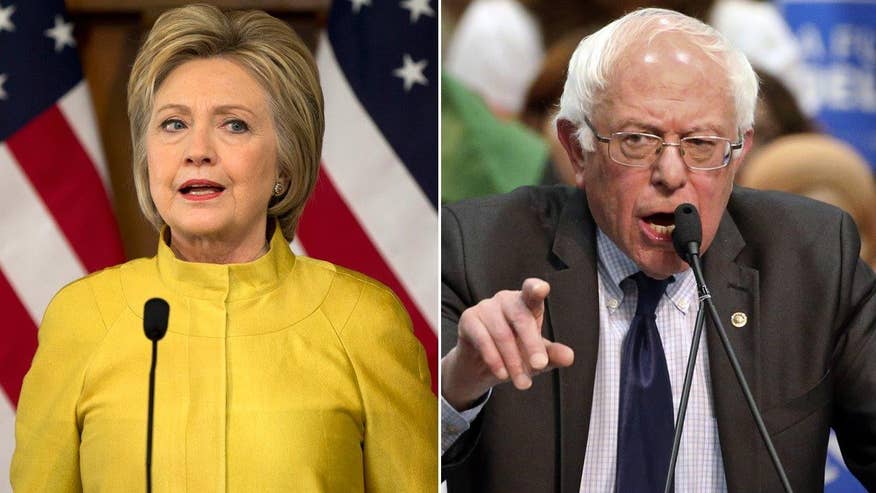
Democratic presidential candidate Sen. Beie Sanders is looking for big wins Saturday in Alaska, Hawaii and Washington’s caucuses, trying to cut into front-ruer Hillary Clinton’s sizable lead and kick-off a Weste swing that he can ride to the July nominating convention.
The biggest prize will be Washington, in which 101 delegates are up for grabs.
The Vermont senator and democratic socialist is expected to do well in Washington, considering residents of Seattle, the biggest city in the Pacific Northwest and among the most the liberal in the country, are huge Sanders campaign contributor.
The city has also passed a $15 minimum wage, like the one Sanders wants at the federal level. And on Friday night, he drew at least 10,000 people to a rally at the Safeco Field.
“Don’t let anybody tell you Hillary Clinton is the strongest candidate to take on the Republicans,” he told the crowd. “It is just not true.”
Sanders hopes a win in Washington along with ones in Alaska and Hawaii, which offer 16 and 25 delegates respectively, will ignite his campaign after a rough trip across the South, and lead to wins in Oregon and Califoia, which offers 546 delegates.
The latest headlines on the 2016 elections from the biggest name in politics. See Latest Coverage →
Going into Saturday, Clinton had a 1,223-to-920 lead on Sanders in so-called pledged delegates, who are bound to candidates by their states' elections.
It takes 2,383 delegates to clinch the nomination.
Top Sanders adviser Ted Devine earlier this week expressed optimism about the campaign and told FoxNews.com that he expects Clinton’s lead to be under 300 delegates by this weekend “with a couple of thousands more delegates to go.”
Most of the Washington’s Democratic leadership has endorsed Clinton, including Gov. Jay Inslee and Sens. Patty Murray and Maria Cantwell and Seattle Mayor Ed Murray.
Still, Sanders enters Saturday optimistic after wiing more delegate in three contests earlier this week. He gained a net of nearly 20 delegates with wins in the Idaho and Utah caucuses, despite losing the marquee Arizona primary to Clinton.
Sanders has done slightly better in caucus contests, wiing seven of them compared to five primaries.
He has also raised more in individual contributions from Washington than any other presidential candidate.
Seattle leads the way among large cities in per-capita individual contributions to Sanders, with about $145 for every 100 people, according to an analysis of federal campaign data. In terms of dollars, Seattle trails only New York and San Francisco in total individual contributions from cities, with $884,000 given through the end of February. That does not include individual contributions under $200, which makes up the majority of Sanders' support.
Despite the optimism and fundraising numbers, Sanders would still need a dramatic surge to catch up to Clinton or even hold her under the number needed to clinch the nomination.
"The real problem is the math," said Geoffrey Skelley, a political analyst at the University of Virginia Center for Politics, while noting Sanders does better in caucuses and is helped by “the fact that his supporters are more energized.”
During a Tuesday campaign stop in Everett, about 30 miles north of Seattle, Clinton noted she has gotten 2.6 million more votes than Sanders and more votes than anyone else, including Republican front-ruer Donald Trump.
"The senator has made clear that we're taking this all the way to the convention in July," said Sanders' Washington state director Dulce Saenz. "We have an uphill battle, absolutely. There's no denying the math, but the second half of the primary calendar is much more favorable to Beie."
After this weekend’s contests, there is mostly a lull in the primary calendar until a round of delegate-heavy Easte states vote in late April -- including New York, which Clinton represented in the Senate.
Fox News’ Lauren Blanchard and The Associated Press contributed to this report.